
 Save to Pinterest
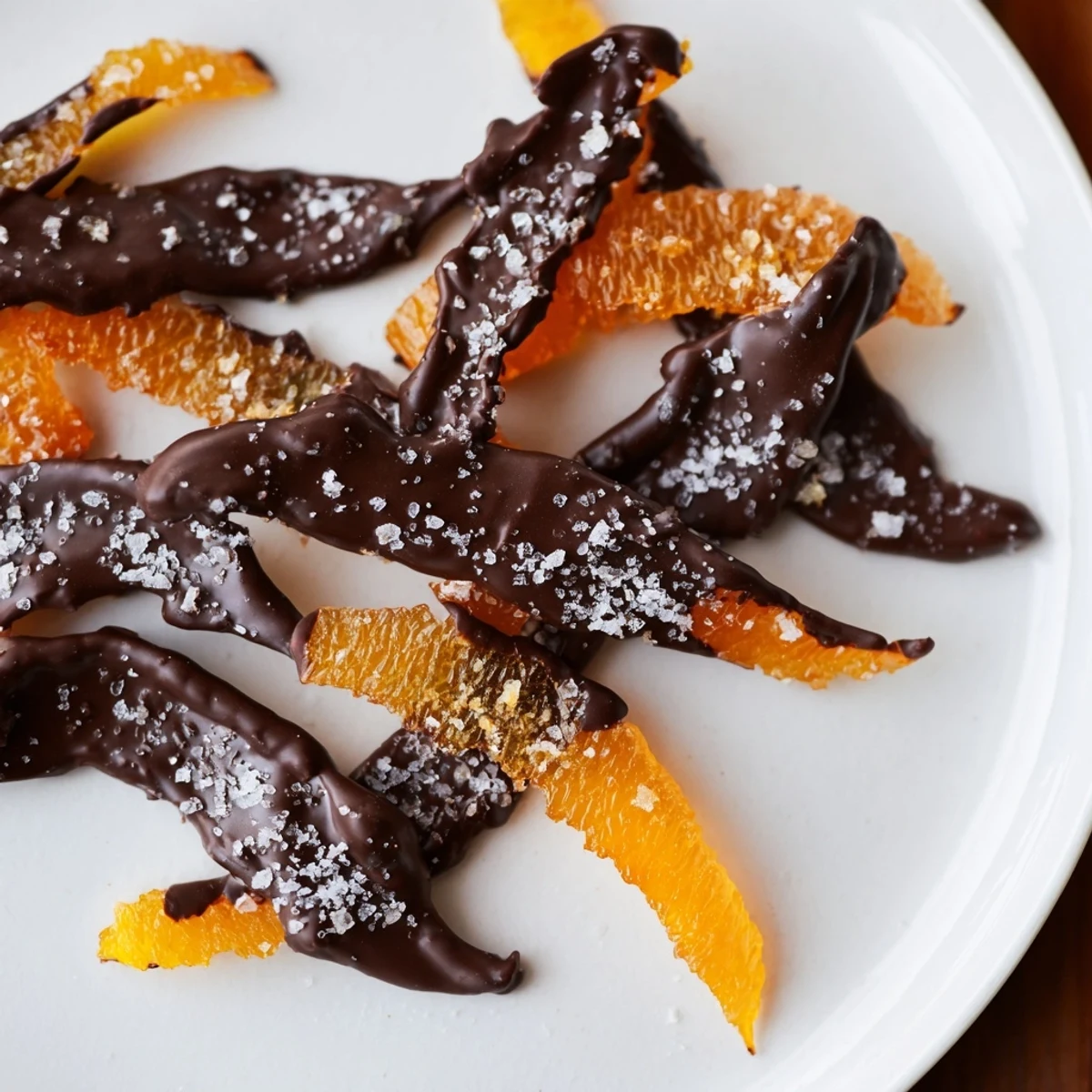
 These chocolate covered orange peels transform simple citrus into an elegant confection. Fresh orange peel strips are blanched to remove bitterness, then slowly simmered in sugar syrup until translucent and tender.
Once dried, each candied strip is dipped halfway into melted dark chocolate and finished with a optional sprinkle of flaky sea salt. The result is a beautiful balance of bright citrus flavor and rich, slightly bitter chocolate.
They keep for up to two weeks in an airtight container, making them wonderful for homemade gifts, holiday treat boxes, or an after-dinner sweet alongside coffee.
The smell of orange oil hitting a hot saucepan is the kind of thing that stops you mid sentence. I was on the phone with my sister when I started peeling oranges for this recipe, and she immediately asked what I was making because she could somehow smell it through the receiver. That sharp, floral burst of citrus scraping against your knife is honestly half the reward of this entire project. The other half is biting into a glossy strip of candied peel shelled in dark chocolate while nobody is watching.
I packed a tin of these for my neighbor Helena last December and she returned the container three days later with a handwritten note asking for the recipe and a fresh batch. Now it is silently understood that every holiday season, a small box of these appears on her doorstep, no questions asked. She told me she hides them from her husband behind the frozen vegetables.
Ingredients
- 3 large oranges: Use thick skinned navel oranges if you can find them, since thinner skins tear during boiling and give you less to bite into.
- 1 cup (200 g) granulated sugar: Plain white sugar keeps the syrup clear so the peels gleam like amber when they are done.
- 1 cup (240 ml) water: Just enough to dissolve the sugar and give the peels room to swim.
- 200 g high-quality dark chocolate (at least 60% cocoa): Spend a little extra here because cheap chocolate will bloom, seize, or taste flat against the intensity of the candied peel.
- 1 tsp flaky sea salt (optional): Maldon or any flaky variety melts on the tongue and cuts through the sweetness in a way that makes each piece dangerously snackable.
Instructions
- Prep the oranges:
- Wash the oranges thoroughly under warm water, scrubbing away any wax. Score each peel from top to bottom in four vertical lines with a sharp knife, then gently pry the peel away in large pieces, keeping a thin layer of white pith attached since it holds the candy.
- Cut into strips:
- Slice each piece of peel into uniform strips roughly half a centimeter wide so they cook evenly and look elegant when dipped.
- Blanch three times:
- Drop the strips into a saucepan of cold water, bring it to a rolling boil for two minutes, then drain completely. Repeat this twice more until the peels have lost their harsh bitterness but still taste unmistakably orange.
- Make the syrup:
- Combine the sugar and water in the same saucepan over medium heat, stirring gently until every crystal dissolves and the liquid runs clear before you add the peels.
- Candy the peels:
- Slide the blanched strips into the simmering syrup and let them cook slowly for about forty minutes, stirring once in a while, until they turn translucent and look like stained glass catching kitchen light.
- Dry on a rack:
- Lift each strip out with tongs and lay them across a wire rack set over parchment paper, leaving space between so air can circulate. Give them at least an hour to become tacky rather than wet.
- Melt the chocolate:
- Set a heatproof bowl over a pan of barely simmering water and stir the chocolate until it is completely smooth and glossy, taking care that no steam or water sneaks in.
- Dip and finish:
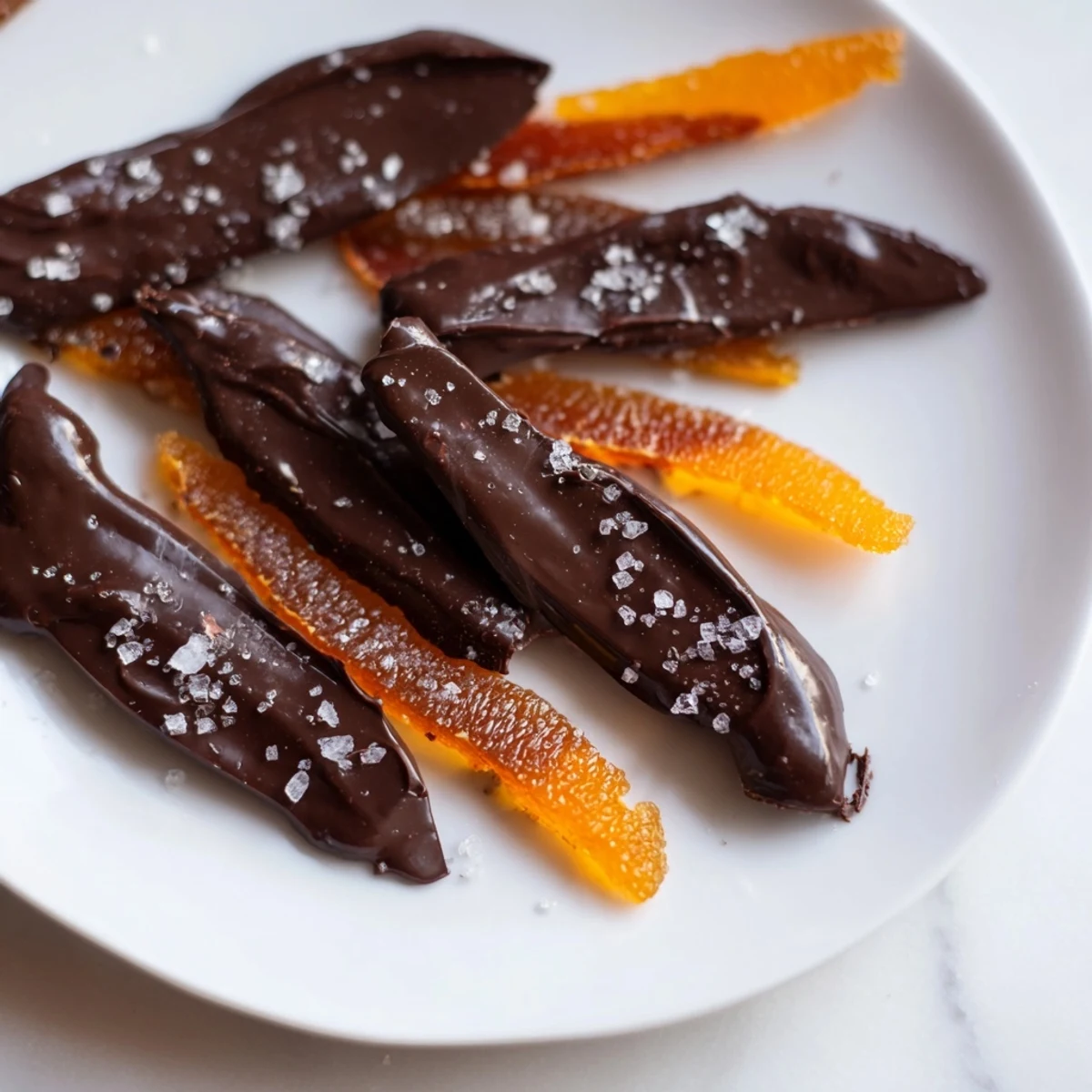
- Dip each candied strip halfway into the melted chocolate, let the excess drip back into the bowl, and place it carefully on fresh parchment. Sprinkle with flaky salt while the chocolate is still wet, then leave everything at room temperature for about thirty minutes until the shells set with a satisfying snap.
 Save to Pinterest
 There is a specific quiet that settles over a kitchen when chocolate is setting on parchment and the only sound is the tap of tongs being set down. I stood in that quiet once, midnight, flour on my apron from something else entirely, eating three strips before they had fully hardened. They were still slightly soft in the center and I have never been able to replicate that texture on purpose.
Storage That Actually Works
Keep these in a single layer in an airtight container at cool room temperature and they stay beautiful for up to two weeks. Layering them with parchment between rows prevents the chocolate from sticking and pulling. The refrigerator is not your friend here because condensation will dull the chocolate and make the peels weep. If your kitchen runs hot, the coolest cupboard or a brief stint near an open window works better than any chilled shelf.
Swapping the Citrus
Grapefruit peels turn wildly bitter and need a fourth blanching, but the result is sophisticated and pairs especially well with a slightly sweeter milk chocolate dip. Lemon peels candy faster, sometimes finishing in thirty minutes, and their thinner skins create a more delicate, almost lace-like strip. Mixing all three citrus types in one gift box looks stunning and lets people discover their favorite without you having to guess. I once added a few tangerine peels on a whim and they were the first to disappear.
Gift Giving Without the Stress
Small cellophane bags tied with kitchen twine or brown paper bags stamped with a citrus drawing are all the packaging these need. People care about what is inside, and the chocolate sheen speaks for itself.
- Make a double batch because you will eat at least a third before anyone arrives.
- Label any batch that uses grapefruit so nobody gets a surprise burst of bitterness.
- Taste one strip before boxing the rest to confirm the chocolate thickness and salt level feel balanced.
 Save to Pinterest
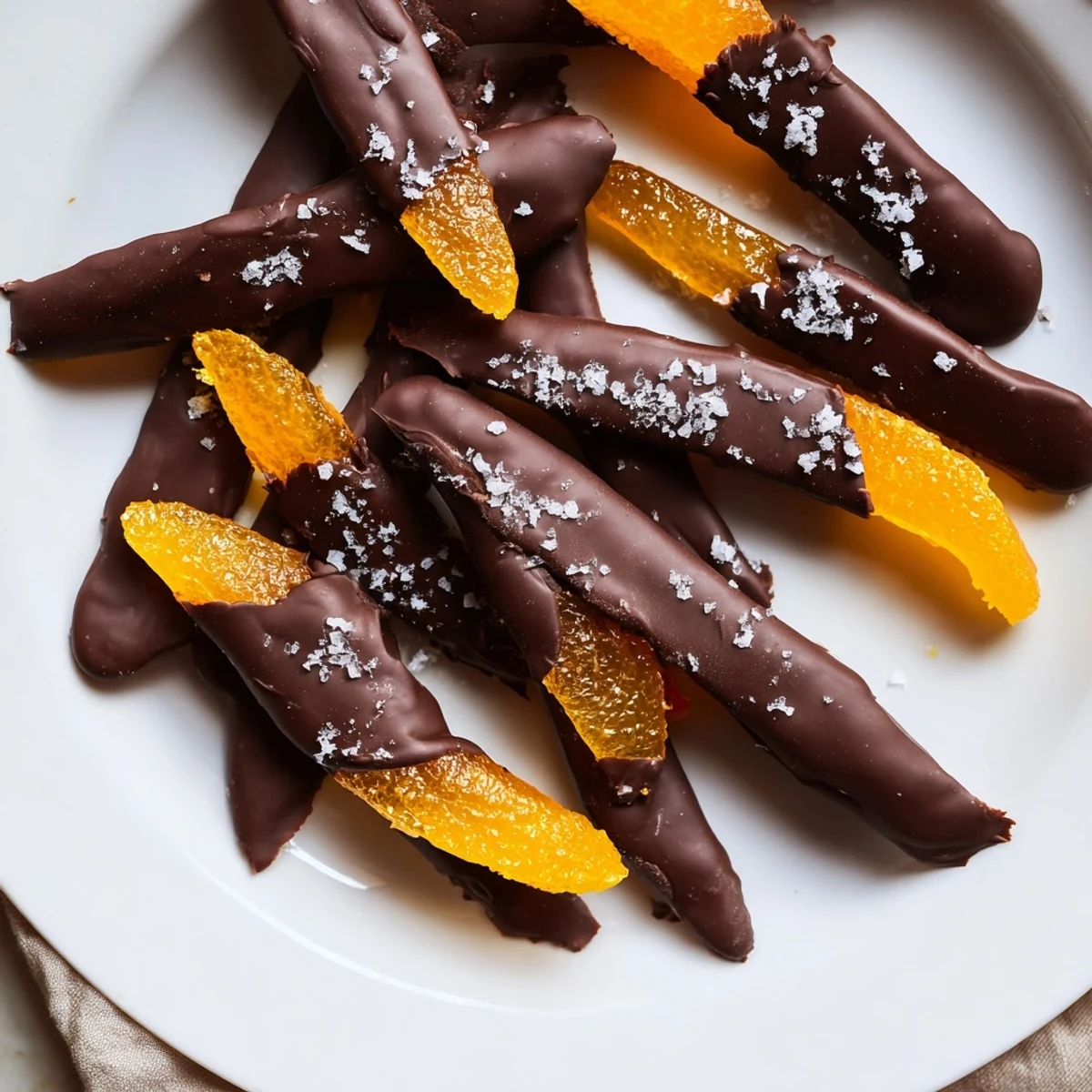
 A strip of candied orange peel dipped in dark chocolate is proof that patience and sugar can transform something most people throw away. Keep a tin hidden behind the lentils and you will always have a small joy within reach.
Recipe Questions & Answers
- → How do I reduce bitterness in the orange peels?
-
Blanching the peels three times in boiling water is essential. Each boil-and-drain cycle draws out bitter compounds from the white pith. Don't skip any of the three rounds, and always start with cold water before bringing to a boil.
- → Can I use milk or white chocolate instead of dark?
-
Yes, you can substitute milk or white chocolate, but dark chocolate (60% cocoa or higher) provides the best contrast against the sweet candied peel. Milk chocolate will make the overall treat sweeter, while white chocolate adds a creamy, buttery note.
- → How long do chocolate covered orange peels stay fresh?
-
Store them in an airtight container at room temperature for up to two weeks. Avoid refrigerating them, as moisture can cause the chocolate to bloom and the candied peel to become sticky. If your kitchen is very warm, a cool, dry pantry works best.
- → Do I need to temper the chocolate before dipping?
-
Tempering is optional but recommended for a glossy, snappy finish that doesn't melt easily on your fingers. If you skip tempering, the chocolate will still taste delicious but may have a softer set and slightly dull appearance.
- → Can I use other citrus fruits for this technique?
-
Absolutely. Grapefruit, lemon, and Meyer lemon peels all work beautifully with the same blanching and candying method. Grapefruit peels offer a more assertive bitterness, while Meyer lemon peels are delicately floral and sweeter.
- → Why are my candied peels not turning translucent?
-
Translucency depends on simmering time and syrup concentration. Make sure the sugar is fully dissolved before adding the peels, and maintain a gentle, consistent simmer for the full 40 minutes. Rushing the process or boiling too aggressively can prevent proper sugar absorption.