
 Save to Pinterest
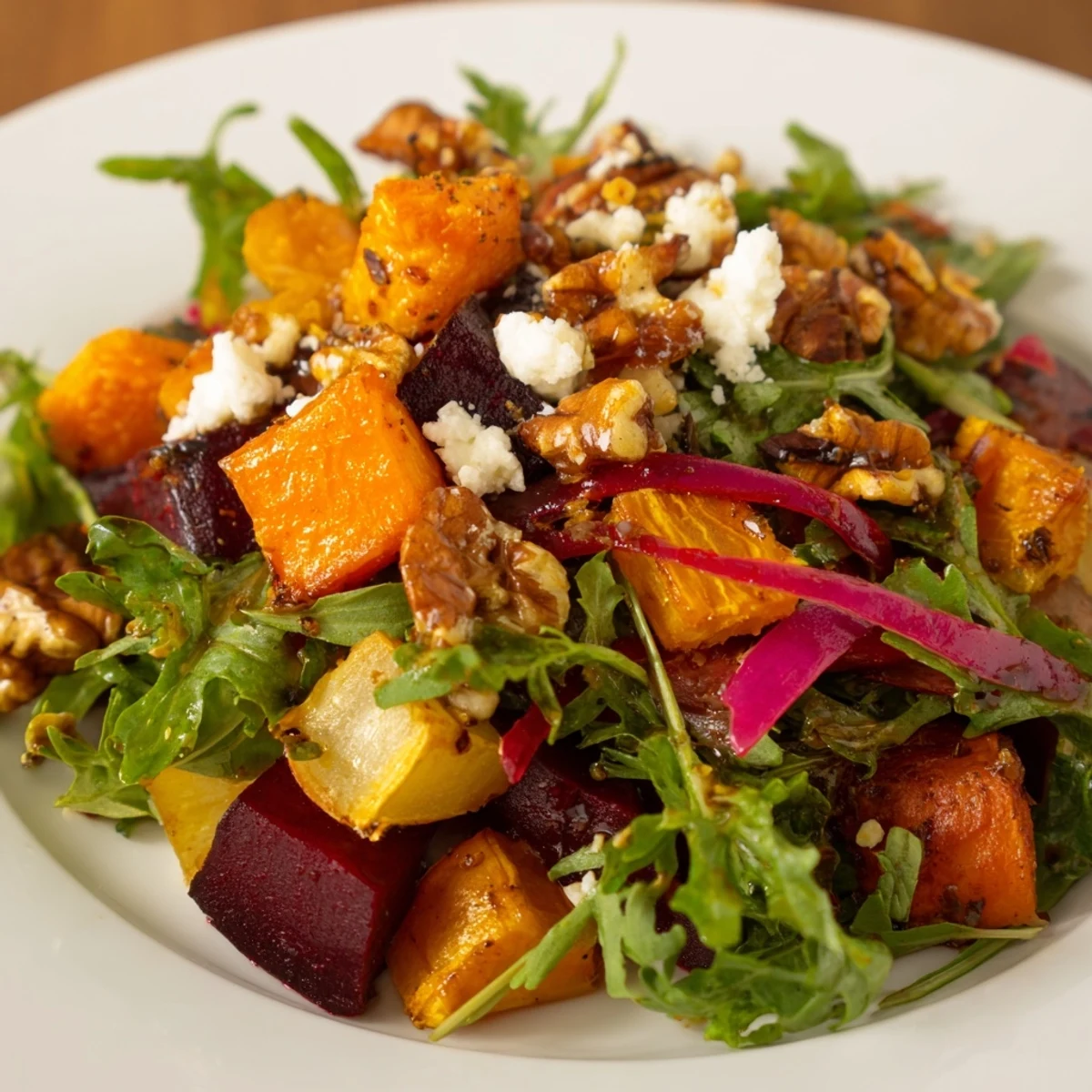
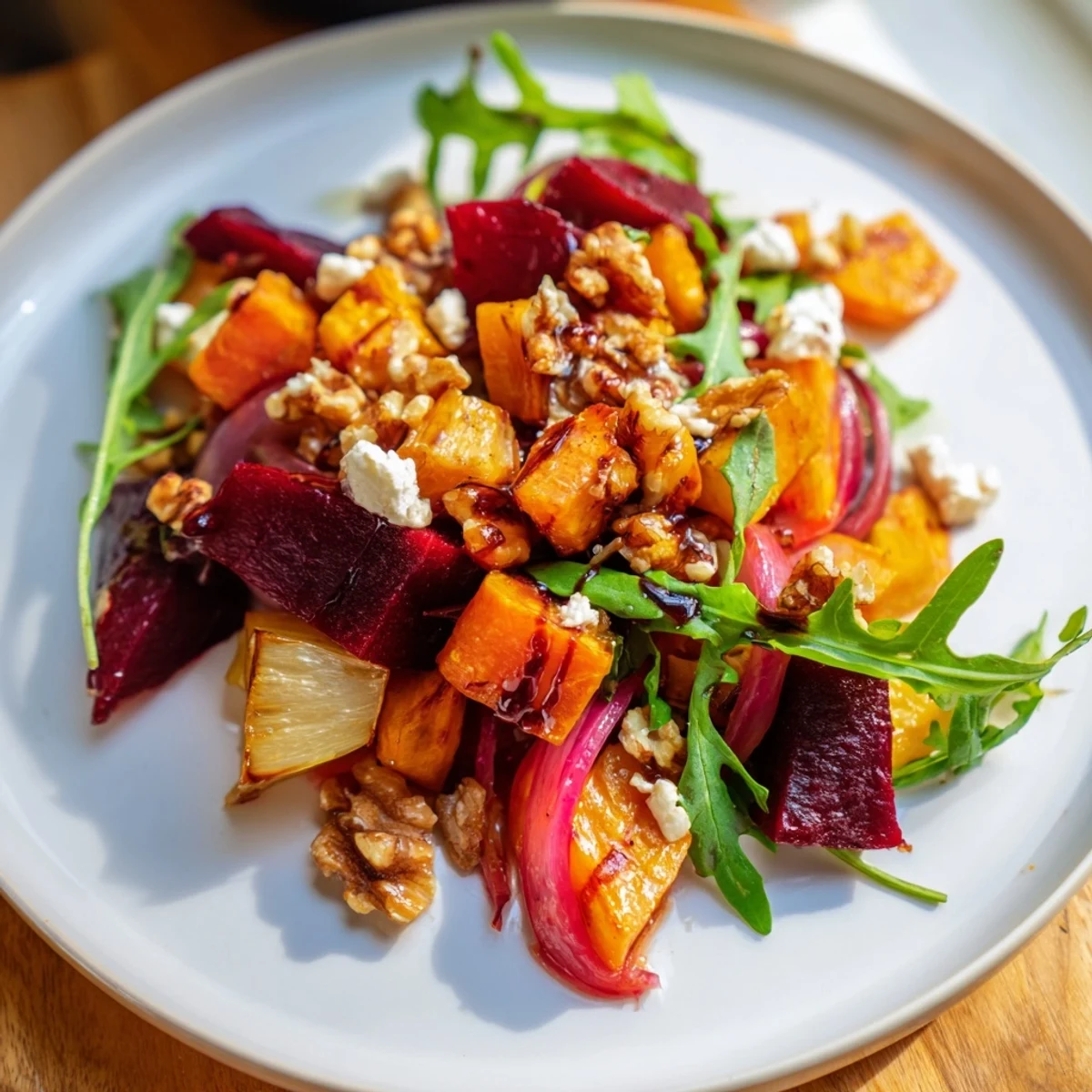
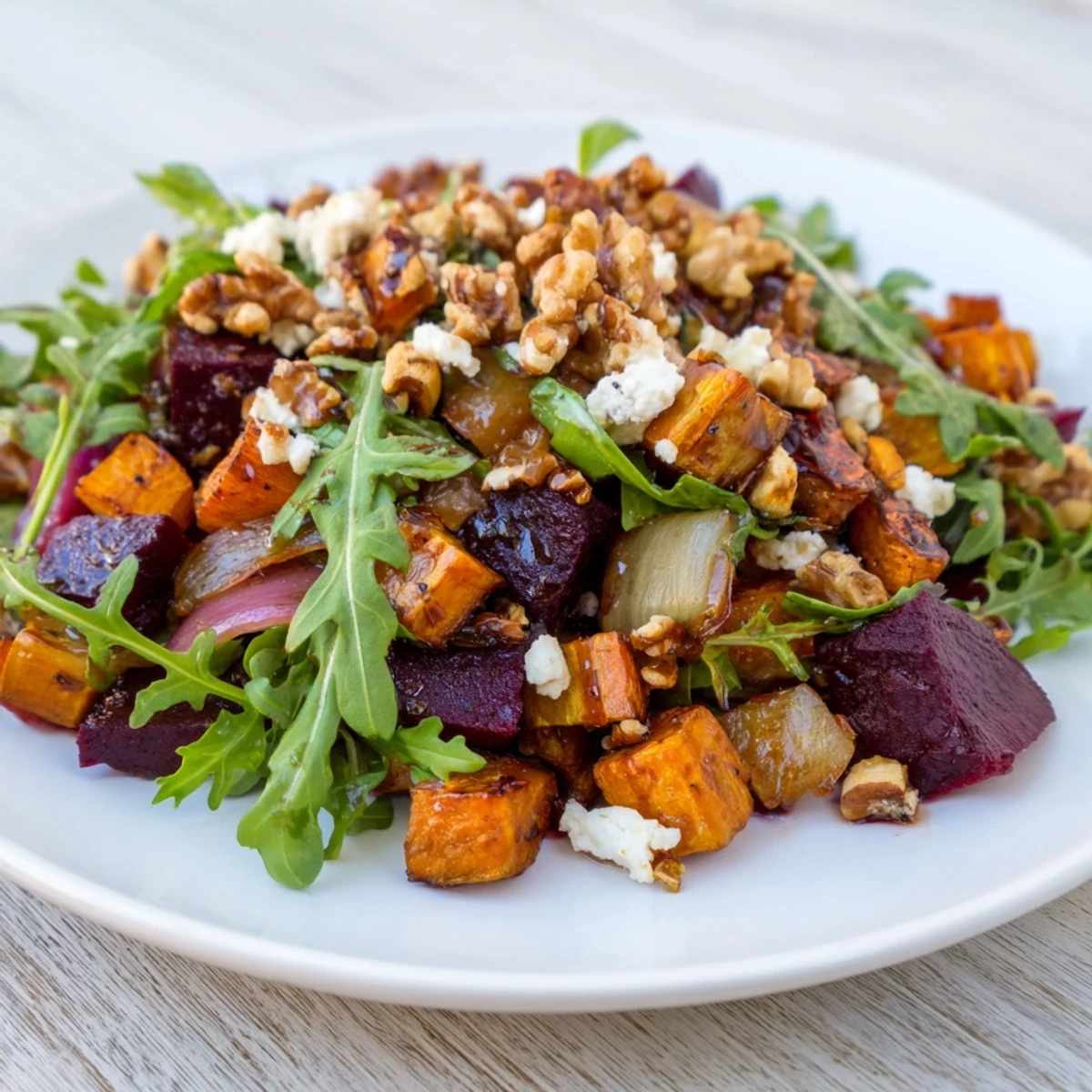
 This dish highlights caramelized carrots, parsnips, sweet potato, and beet, roasted to tender perfection. Combined with peppery arugula, sliced red onion, toasted walnuts, and creamy goat cheese, it balances hearty and fresh textures. A maple-balsamic vinaigrette ties the flavors together with a hint of sweetness and acidity. Ideal for a light main or side, this salad suits vegetarian and gluten-free diets, bringing warmth and brightness in every bite.
Last fall, I stood at the farmers market with a paper bag slowly filling up with jewel-toned root vegetables, and it hit me that I'd been roasting them the same uninspired way for years. That afternoon, I decided to stop treating them as a side dish afterthought and built an entire salad around their caramelized sweetness instead. The moment the warm, golden vegetables met the peppery arugula and tangy vinaigrette, something clicked—this wasn't just another salad, it was the kind of dish that makes you pause between bites.
I made this for a dinner party on a chilly October evening, and I watched my friend Sarah take one bite and immediately ask for the recipe before she'd even finished chewing. That's when I knew this wasn't just my new favorite—it had staying power.
Ingredients
- Carrots and parsnips: These are your sweetness anchors; the natural sugars caramelize in the oven and turn almost jammy.
- Sweet potato: Adds creaminess and a deeper earthiness that keeps things balanced and substantial.
- Red beet: Don't skip this—it brings both visual drama and a subtle mineral complexity that rounds out the flavor.
- Olive oil: Use a generous hand here; it's what creates those crispy, golden edges everyone fights over.
- Baby arugula: The peppery bite cuts through the sweetness and keeps the salad from feeling too heavy.
- Goat cheese or feta: Creamy and tangy, it's the little surprise that makes you want another forkful.
- Balsamic vinegar and Dijon mustard: These two are the backbone of a vinaigrette that actually tastes like something—not just watered-down oil.
- Toasted walnuts: Completely optional but they add a satisfying crunch and earthiness that feels intentional.
Instructions
- Get your oven ready and prep the vegetables:
- Preheat to 425°F while you peel and cut your root vegetables into roughly 1-inch pieces—aim for similar sizes so they roast evenly. Uniformity here means everything gets tender at the same moment.
- Season and spread:
- Toss everything with olive oil, salt, and pepper in a bowl, then spread it all out on a parchment-lined baking sheet in a single layer. Don't crowd the pan—they need room to breathe and brown, not steam.
- Roast until golden:
- Pop them in for 30 to 35 minutes, stirring halfway through. You're looking for edges that are caramelized and crispy, with centers that are tender enough to cut with a fork—that's when the magic happens.
- Build the vinaigrette while you wait:
- Whisk olive oil, balsamic vinegar, Dijon, and maple syrup together in a small bowl until it emulsifies slightly. Taste it and adjust—it should be balanced between tangy and slightly sweet.
- Assemble with care:
- Combine your cooled vegetables (they can still be warm) with arugula, thin red onion slices, and walnuts in a large bowl. Drizzle the vinaigrette over everything and toss gently so the greens don't bruise.
- Finish and serve:
- Top with crumbled goat cheese right before serving—this keeps it from getting lost in the tossing and ensures every bite has a creamy pocket of it.
 Save to Pinterest
 There was a quiet moment at dinner when everyone stopped talking just to eat, and I realized that a simple salad had somehow pulled the whole table together. That's the kind of food worth making again and again.
Roasting is Everything
The difference between mediocre roasted vegetables and extraordinary ones comes down to heat and patience. At 425°F, the vegetables caramelize rather than just soften, developing those deep, complex flavors that make people lean back and say, 'Wow.' Don't be tempted to lower the heat to speed things up—the oven needs to be hot enough to create those crispy edges while keeping the insides tender. This is where the real flavor comes from.
The Vinaigrette Makes the Dish
I learned this the hard way after making the salad with a wimpy dressing that tasted like I'd just drizzled some oil on greens. The balsamic vinegar brings depth, the Dijon adds a subtle sharpness, and the maple syrup (or honey) ties everything together with a whisper of sweetness that echoes the roasted vegetables. A good vinaigrette should taste bold enough to stand alone on a spoon—if you have to second-guess it, it needs more seasoning.
Mix-Ins and Variations
This salad is forgiving and flexible, which is part of why I keep coming back to it. Swap in roasted turnips, rutabaga, or even Brussels sprouts if that's what you have on hand. The walnuts can be replaced with pecans or seeds, and if dairy isn't your thing, a good nutritional yeast or plant-based cheese works beautifully. The point is to build something that feels right for your kitchen and your preferences.
- Try adding roasted chickpeas for extra protein and a satisfying crunch.
- A handful of pomegranate seeds adds brightness and a burst of tartness if you want more complexity.
- This salad keeps well in the refrigerator for two days, though dress it fresh if you're saving it overnight.
 Save to Pinterest
 This salad has become my quiet victory in the kitchen—the kind of dish that proves simple ingredients and a little bit of care can turn into something truly memorable. Make it once, and you'll find yourself reaching for it all season long.
Recipe Questions & Answers
- → What vegetables are used for roasting?
-
Carrots, parsnips, sweet potato, and red beet are peeled, cubed, and roasted until golden and tender.
- → How is the dressing prepared?
-
The vinaigrette combines extra-virgin olive oil, balsamic vinegar, Dijon mustard, maple syrup, salt, and black pepper whisked until smooth.
- → Can this dish be made vegan?
-
Yes, simply omit the goat cheese or substitute it with a plant-based alternative to keep it vegan-friendly.
- → What nuts complement the salad?
-
Toasted walnuts add a crunchy texture and nutty flavor but can be omitted if allergies are a concern.
- → How should the vegetables be roasted?
-
Toss root vegetables with olive oil, salt, and pepper, then roast at 425°F (220°C) for 30-35 minutes, stirring once, until tender and golden.